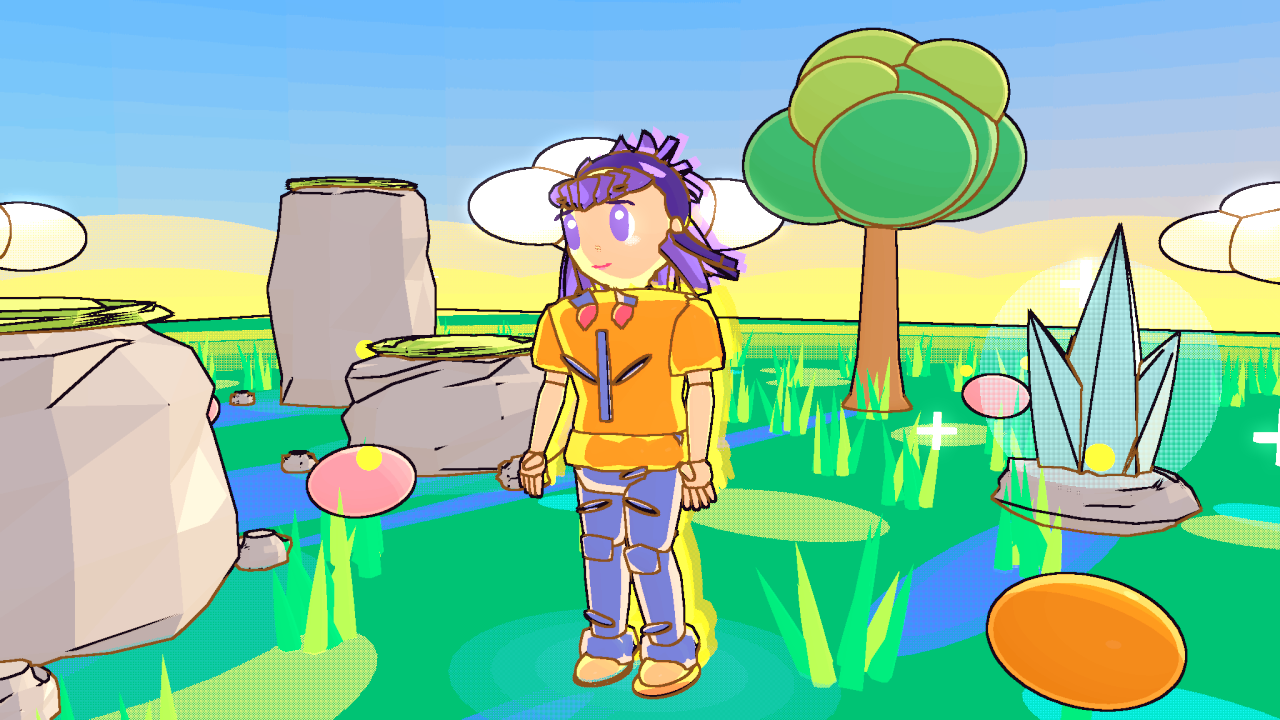
An AI-native creation engine for games and worlds, video and film, animation, sculpting, physics and simulation, and science and engineering tools, built so agents can drive it directly.
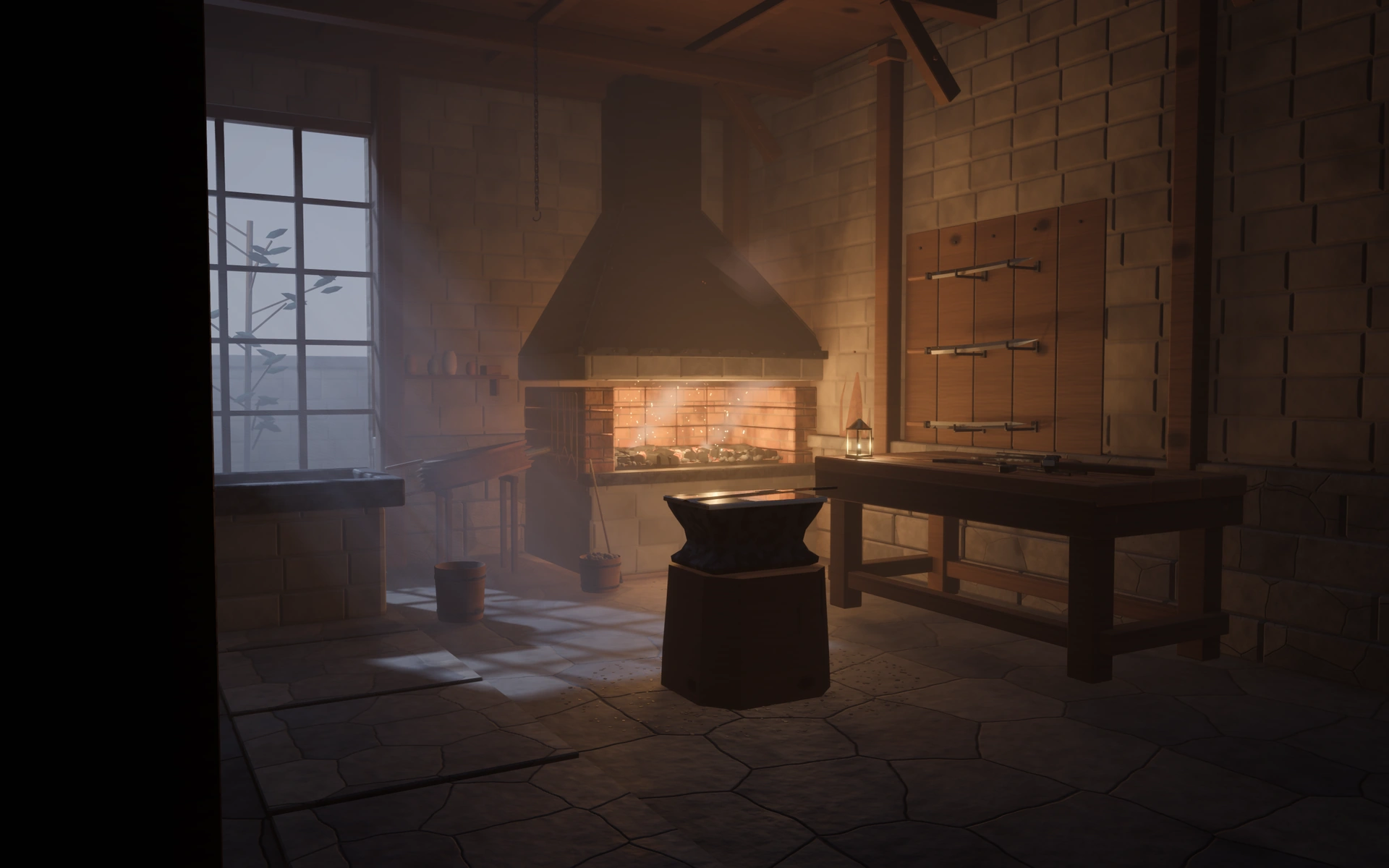
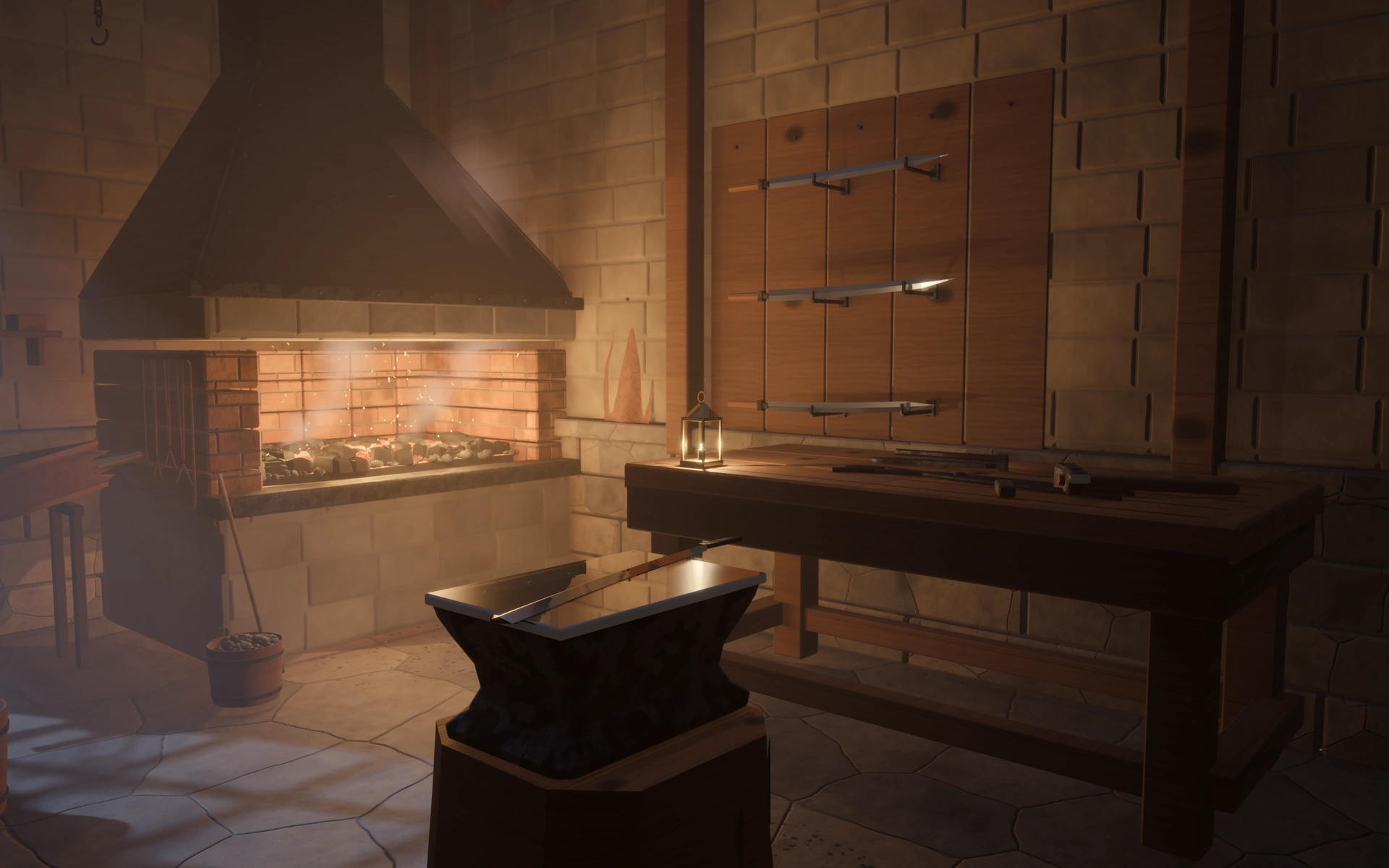
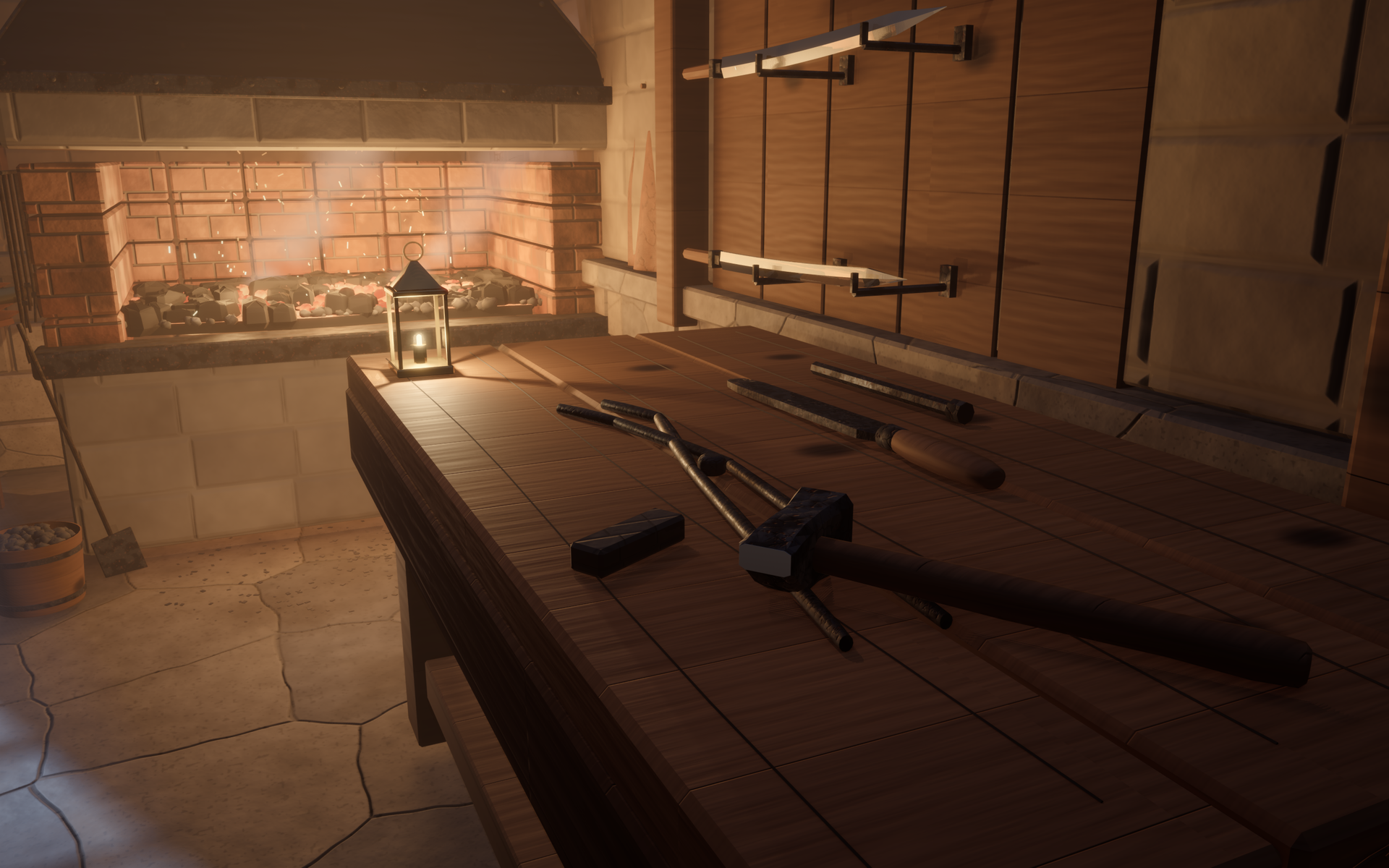
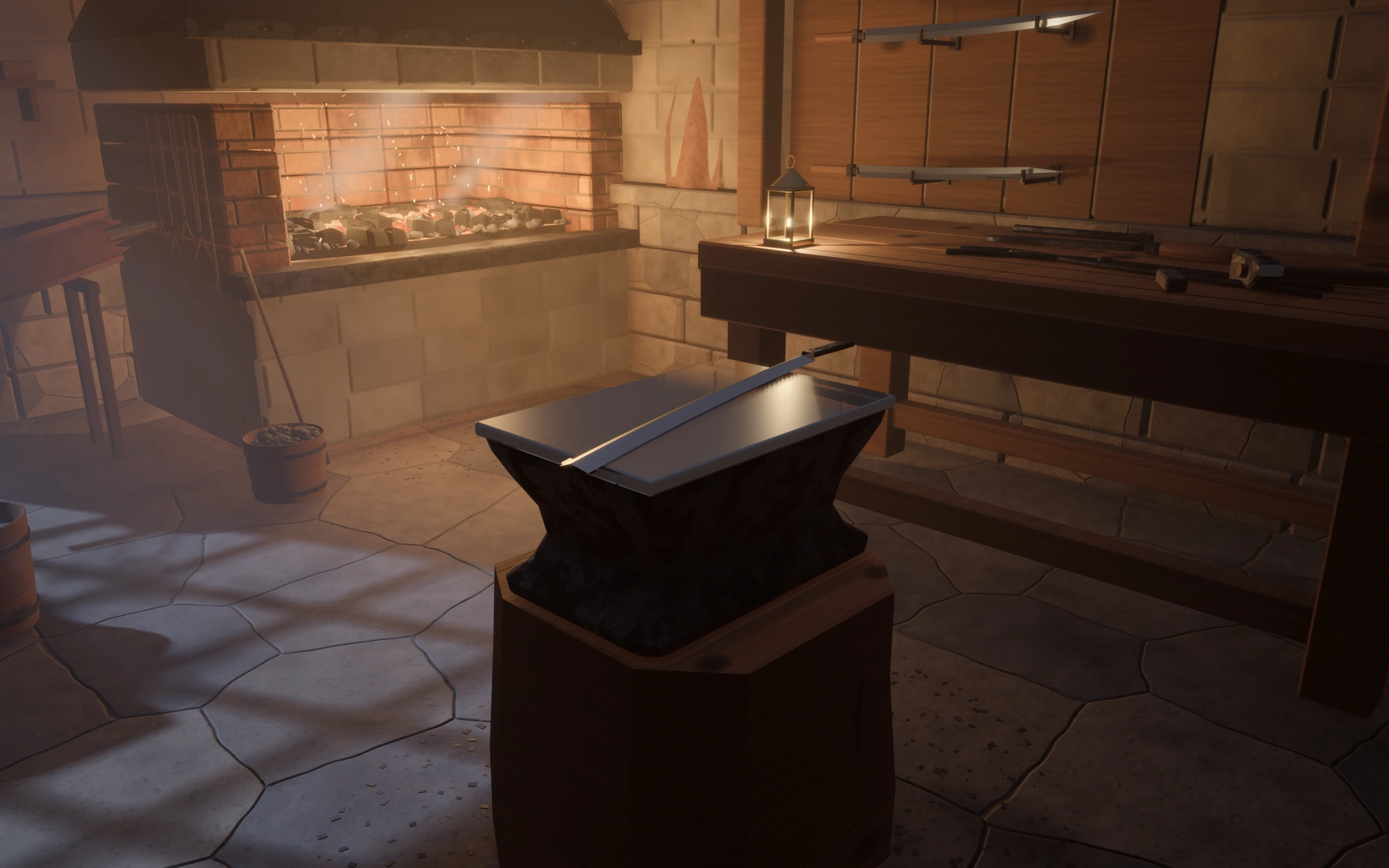
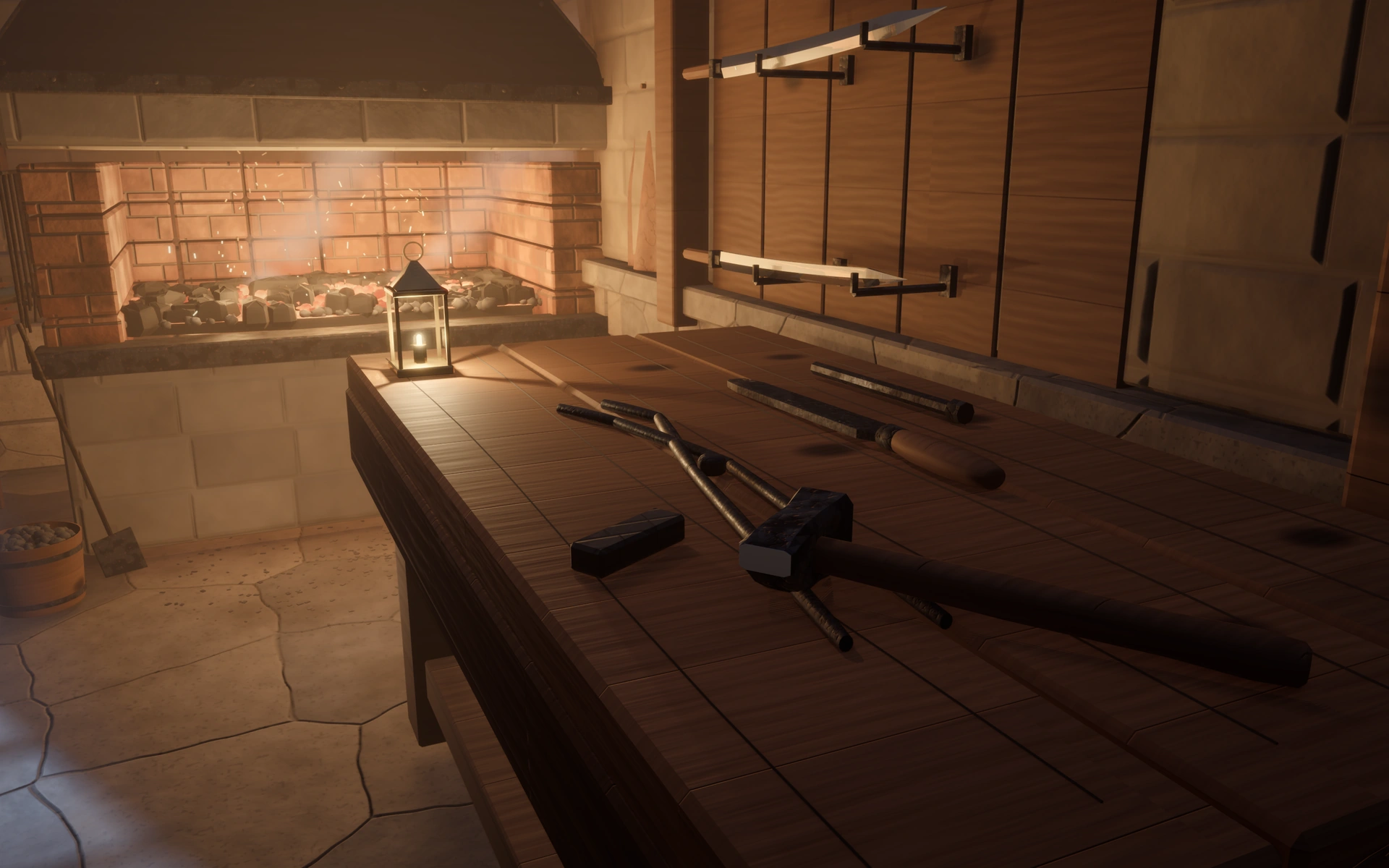
This room is one of its worlds.Native HAMON Engine render
01Shape what you see. Physically based light and stylized rendering.
A native HAMON Engine rendering study.
02Make it respond. Physics, animation and replayable simulation.
Without follow-throughWith follow-through
Authored follow-through: the pendant and stalk lag, overshoot, then settle.
Native animation study · 24 October 2026
03Build the tools, too. Editable assets and programmable workflows.
A Rust workspace of 27 crates with native C++, CUDA, TypeScript and Go components: a deterministic ECS runtime with replay, a full physics engine (rigid, elastic and deformable bodies and engineering solvers), animation and procedural sculpting, perception and video tooling, rendering with a style system of 17 looks, audio, scripting, lockstep networking, an asset pipeline, and a CLI, JSON-RPC and MCP control surface for AI agents. It runs natively and in the browser.
The engine source is private. Public browser games are published snapshots, not the whole current engine. Lanternwake is a published browser-game snapshot and requires WebGPU.
From human movement to computational models, I’m interested in how we observe a system, test an idea, and learn from what does not fit. My work spans academic collaboration and independent investigations, including research developed through HAMON.
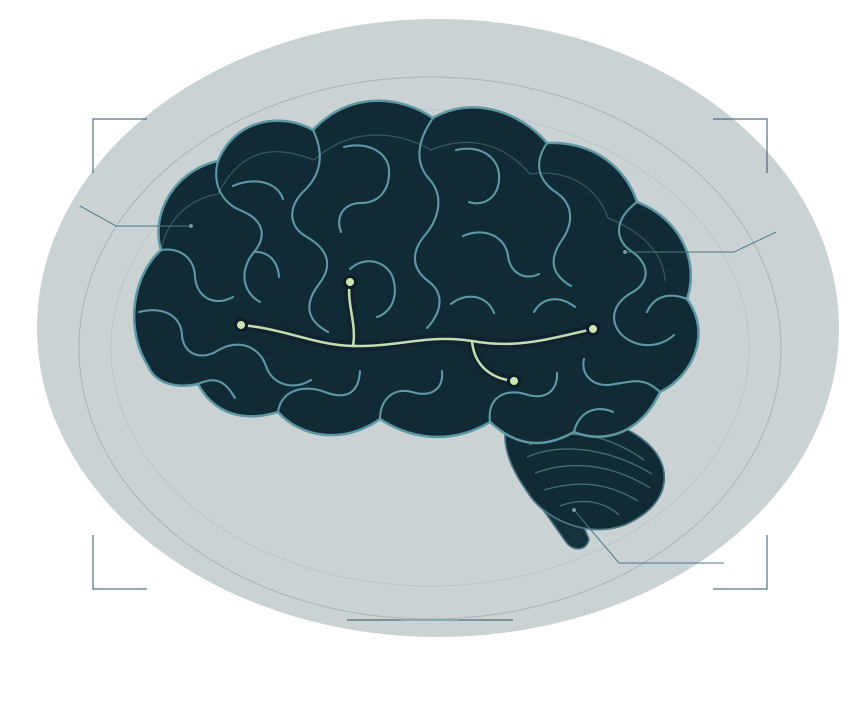
Conceptual illustration · not experimental data
Academic collaboration
I’m a CSULB BUILD Scholar studying computer science and physics, with a minor in biology, and working toward MD/PhD training.
Gait & rehabilitation
Helped with participant sessions, labeled motion-capture markers, and fixed errors in gait-analysis code.
Behavioral neurobiology
Scored mouse behavior from video, checked automated tracking by hand, and analyzed data in GraphPad Prism.
Protein molecular dynamics
Cleaned protein-simulation data and wrote checks for the physical plausibility of proposed protein structures.
Surgical ergonomics
Built video-tracking workflows and helped record and analyze muscle activity, heart rate, and movement.
Independent investigations
WORLDLAW
Which experiment would separate two explanations?
Compare competing models of motion, choose a revealing measurement, and see how their predictions change.
Computed model predictions, not measurements. Normalized torque magnitude; formulas use radians.Inside the study
WORLDLAW starts with spring and gravity models that fit the same small-angle data. A synthetic wide-angle measurement separates them. Coupling Lab explores interacting coordinates and conditional motion; Motion Lab turns tracked video markers into angular observations with explicit calibration. Further experiments test whether a preparation-history effect could instead come from acquisition order or sensor drift.
The model families and their assumptions are stated up front. The default instruments are synthetic, and a good fit does not establish a physical law or its cause.
Kernel Garden
Can a faster kernel keep the right answer?
Generate competing CUDA implementations, run them on a real GPU, and remove candidates that fail independent numerical checks.
Inside the study
Retained trials compare float32 vector-addition implementations on one RTX 4070. The workbench measures the correct candidates and exports the selected kernel. A bounded search tries new launch sizes and an unseen input size; a separate CPU arena explores compiled AXPY variants.
One GPU device and one GPU operator. The search changes launch parameters; it does not establish general algorithm invention or a speedup over vendor libraries.
Computational memory
When should a system change what it remembers?
Explore how new evidence should change retrieval, and when repeated episodes justify a reusable lesson.
Inside the study
One prototype reweights records within fixed trust tiers. Another keeps the raw episodes while testing proposed lessons against later, withheld examples. Conflicting interpretations remain available instead of being overwritten.
Offline studies on synthetic data. They are computational experiments, not a model of biological memory or a measured learning gain.
CaptureSuite
Research software for recording multiple streams in one session and keeping the source material intact for later analysis. The public example walks through an offline quality-control report.
Real places you care about, turned into living, hand-painted worlds you explore at human, bird and insect scale, rendered live by the HAMON Engine in your browser.
24 recorded synthetic choices, not live recommendations. Move or omit picks, undo and redo edits, save and reopen a week, print, or export a calendar. No account, live Qloo or model calls, or real health information. Not medical or dietary advice.
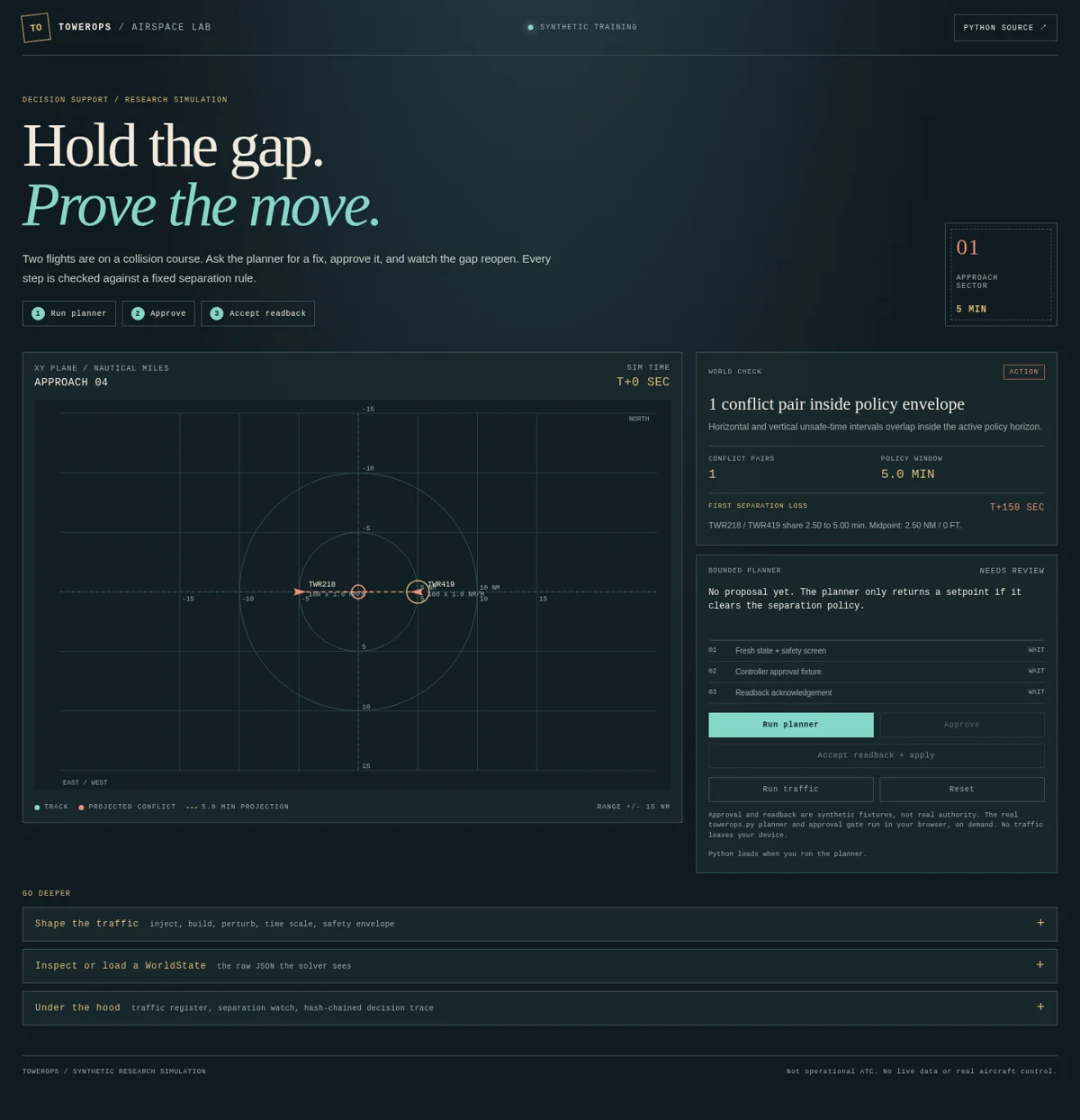
Create flights, change their paths, and inspect proposed adjustments. Simulated changes go through approval and readback with an audit trail. Synthetic demo, not operational ATC. Uses synthetic or visitor-provided data.
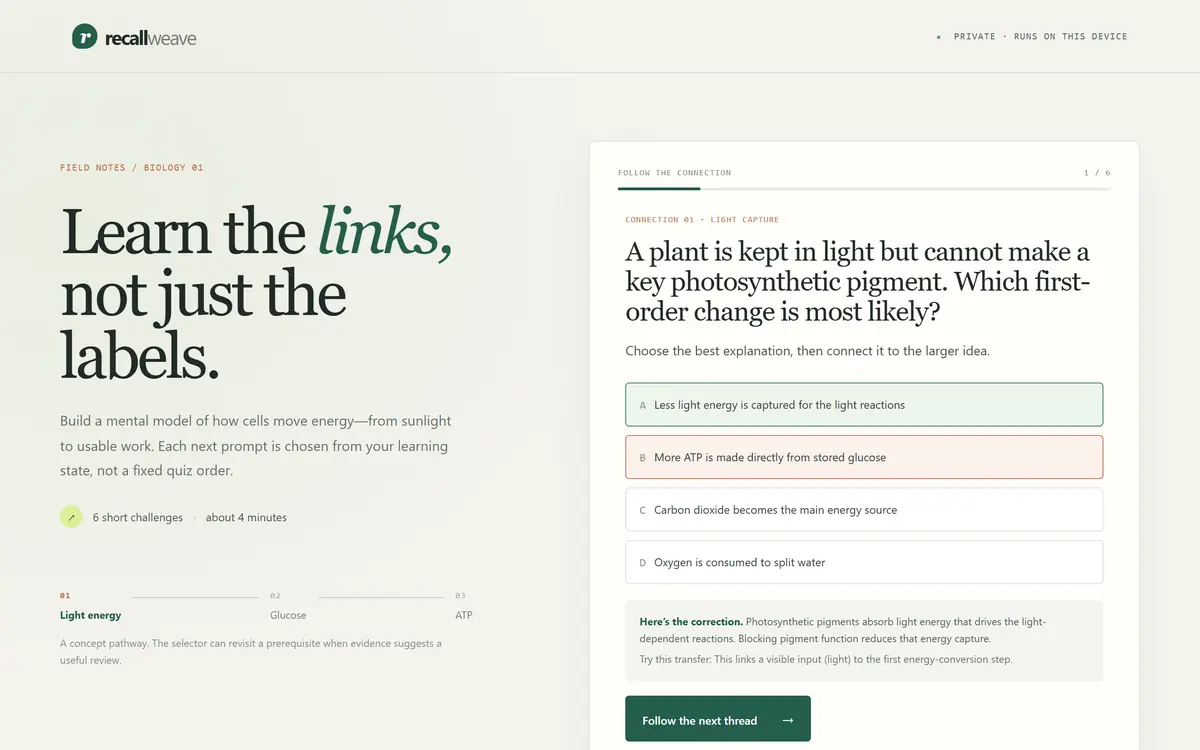
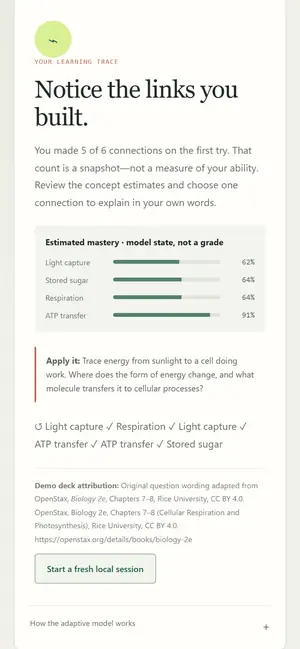
The learner exposes Bayesian model estimates, not grades or demonstrated learning gains. Work with local lesson files and explicit downloads; no account or cloud service.
A video records one camera’s path. Phantom Window lets you explore nearby viewpoints: lean away from the original framing, inspect an edge, and compare what changes.
Current scope
The prototype estimates depth and camera motion, reuses pixels across frames, and renders nearby viewpoints. Source comparison and pixel provenance keep the reconstruction open to inspection.
Nearby views contain estimated geometry and inferred regions.
Captionverse
What if the film waited for you?
Explore the idea
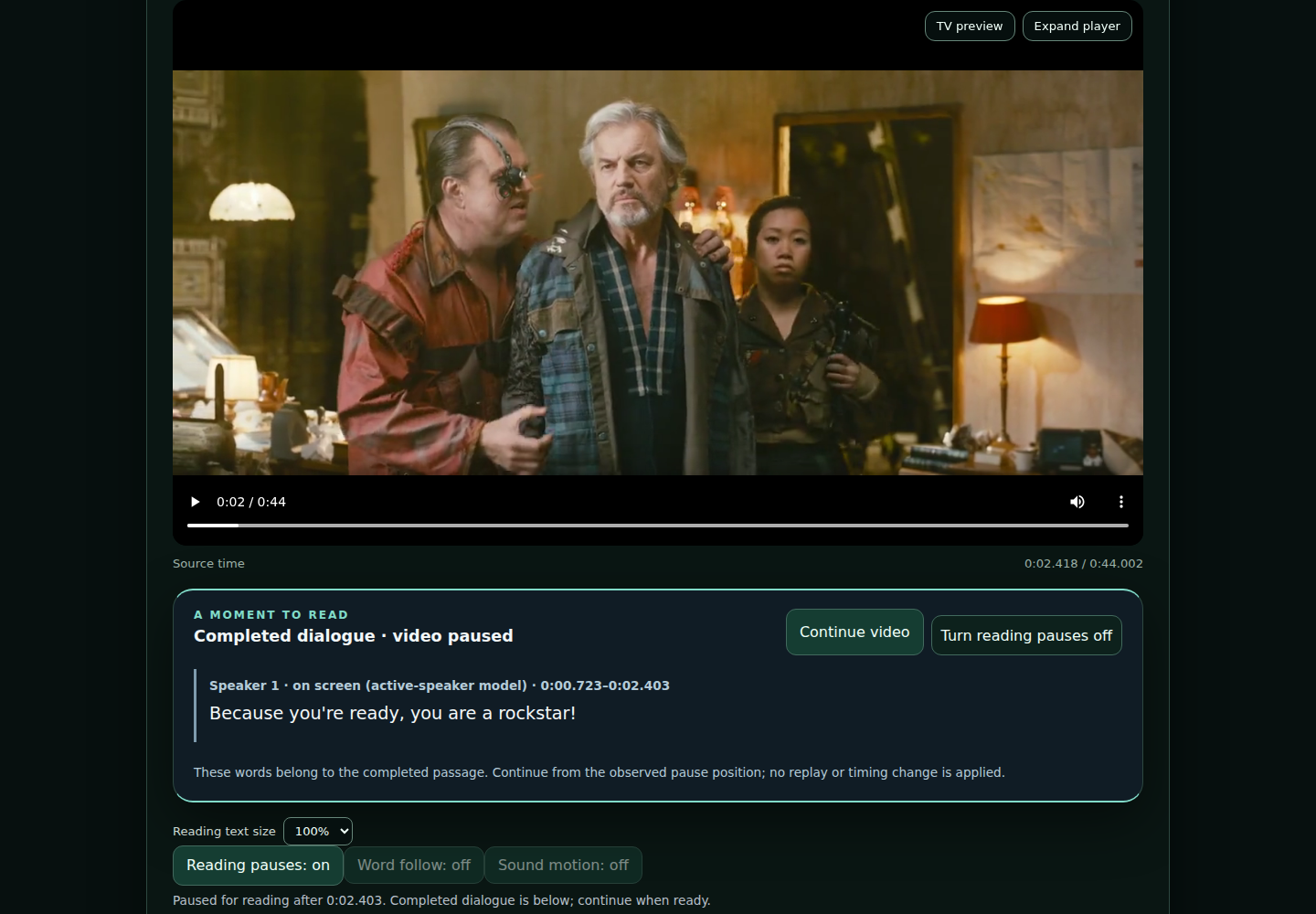
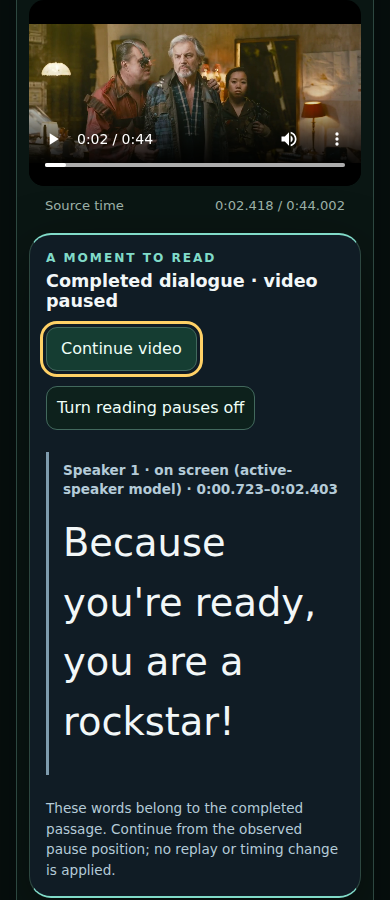
A line disappears before you finish reading. Captionverse can pause after a passage and keep the complete dialogue visible until you choose to continue.
A moment to read. The video has paused; the complete passage stays visible until the viewer continues.
Captured 23 October 2026 from the local prototype. The phone capture uses 200% reading text.
The local-video workbench combines spatial captions, phrase replay, and reviewed editing. Adjust the handover between two lines or name selected dialogue while keeping original subtitle bytes separate from the accepted revision.
Local prototype. Automatic transcription and placement remain drafts to review. Authored speaker labels do not verify identity.
DOMINO
Why did the door unlock when nobody was home?
Explore the idea
A familiar visitor rings after the resident leaves. Which rule still lets them in? DOMINO lets you compose that sequence, follow the commands it triggers, and compare a repair without losing the original case.
Current scope
Compose and save your own local scenarios, replay their event chains, reduce a counterexample, and compare repairs against behavior that should still work. Reopen a case to inspect the original and repaired rules.
Invented events and finite model checks; no real-home connection.
Replay Forge · court reconstruction
Could you watch the possession from above?
Explore the idea
A broadcast camera catches the possession as it happens. Replay Forge explores that movement through a navigable court model and lets an alternative play branch beside it.
Current scope
A licensed 19-second basketball excerpt supplies person and ball detections. A calibrated court, free camera, source inset, and saved branches support comparison without overwriting the original.
Tracking is fragmented. Alternate plays are authored, not predictions.
Lanternwake
Restore the lights. Return at dawn.
Explore the idea
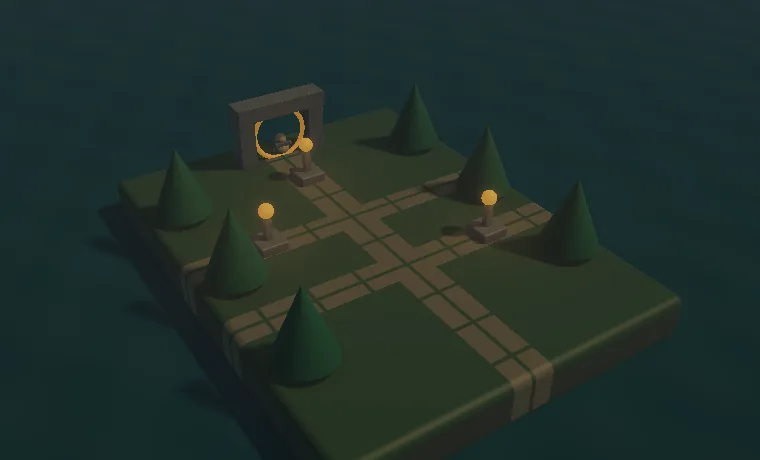
Three lanterns give you a reason to cross a small island. Bring them back to life, then find the stone arch as morning arrives.
WebGPU required. The published game is a snapshot, not the whole current engine.
Local experiments
Threadline
What did we actually agree to?
Review commitments and dependencies beside the exact conversation words. Corrections preserve the history of the interpretation.
Current scope
Local prototype. Suggestions are reviewed by a person; there is no live Bee connection yet.
Familiar Memories
Which memories should this visitor see?
Build a local photo story from approved sources, with visitor-specific sharing and deliberate revocation.
Current scope
Local prototype. A fictional demo family. Who may see what is set by the keeper; identities are not verified.
Threshold
What should the door say back?
Read a visitor’s stated needs, preview the exact reply, and approve only those words. A same-computer rehearsal shows the resident and visitor sides, with a saved decision to revisit.
Current scope
Local prototype. Authored visits in a local rehearsal; no external delivery, identity verification, or lock control.
LedgerDock
What arrived, and what is still unresolved?
Track orders, split shipments, parcel checks, count corrections, returns, and replacements in a local receiving workbench.
Current scope
Local prototype. Manual records; no automated inspection or multiuser sync.
Teachback
Does the same idea still work in a new problem?
Explain a quantitative idea, make a prediction, inspect task-specific feedback, and try an authored application or later revisit.
Current scope
Local prototype. Four authored topics. Writing is not semantically graded; learning gains are unmeasured.
Clearway
Which observed conditions meet a spatial rule?
Evaluate explicit observer annotations against spatial criteria and inspect the resulting judgments.
Current scope
Local prototype. Annotation-based evaluation, not camera perception or object detection.
Open-source utilities
CanvasPilot
An MCP server and CLI for Canvas LMS that rides the browser session you already have, for schools that disable personal access tokens.
Three small Python checks for back-office paperwork (utility bills, freight detention, PT authorizations), run on synthetic data with file:row evidence.
A small reference engine for fanning work out to many agents: dependency plans, a SQLite dispatch queue, and recovery that reconciles state instead of replaying it.
Original geometry, materials and lighting, rendered by HAMON Engine. These are prerecorded camera journeys through that room; every movement can be skipped.